Organization
An organization’s own description, and what its public repositories add up to: how many there are, the stars, forks and watchers they hold between them, and how much is open across them. Releases, commits, public members, the most common language and the founding year are there for the asking.
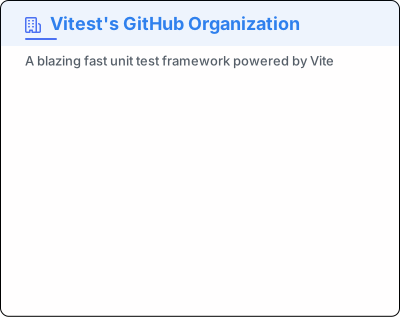
?org=forge-guild&show=releases,commits,top_languageRequired
Section titled “Required”| Option | What it is |
|---|---|
org | The organization’s login — the name in github.com/<org> |
Options
Section titled “Options”| Option | Values | What it does |
|---|---|---|
show | releases commits members top_language created | Draw these stats as well |
hide | repos stars forks watchers open_issues open_prs | Leave these stats out |
show_icons | true false | Show an icon beside each stat (on by default) |
hide_description | true false | Leave the organization’s description out |
show and hide each take any stat the card draws; a stat named in both is left out.
Plus the common options.
The token it needs
Section titled “The token it needs”A classic token with no scopes draws the public totals; show=members needs the organization
Members permission, and draws an error without it. See
the organization cards for each kind of token.
What the totals count
Section titled “What the totals count”Every total but the repository count is summed over the organization’s public, non-fork repositories, and the repository count is those same repositories — a private repository is invisible to the card whether or not the token can see it.
Only the first 500 of them are read, most-starred first.
An organization with more gets its summed totals written as 18.7k+:
a lower bound, since the repositories past the 500th are the least-starred ones.
The repository count is GitHub’s own, so it is never short.
Three of them need spelling out:
- Commits counts the default branch of each repository — every author, merges included, and whatever history a repository was imported with. It is a measure of how much code has moved through the organization, not of who wrote it.
- Open issues and open PRs are what is open right now, so they move on their own.
- Members counts the people whose membership the organization shows publicly.
Membership is private by default, so it is usually fewer people than the organization has —
and
0for an organization whose members are all private.